Abstract
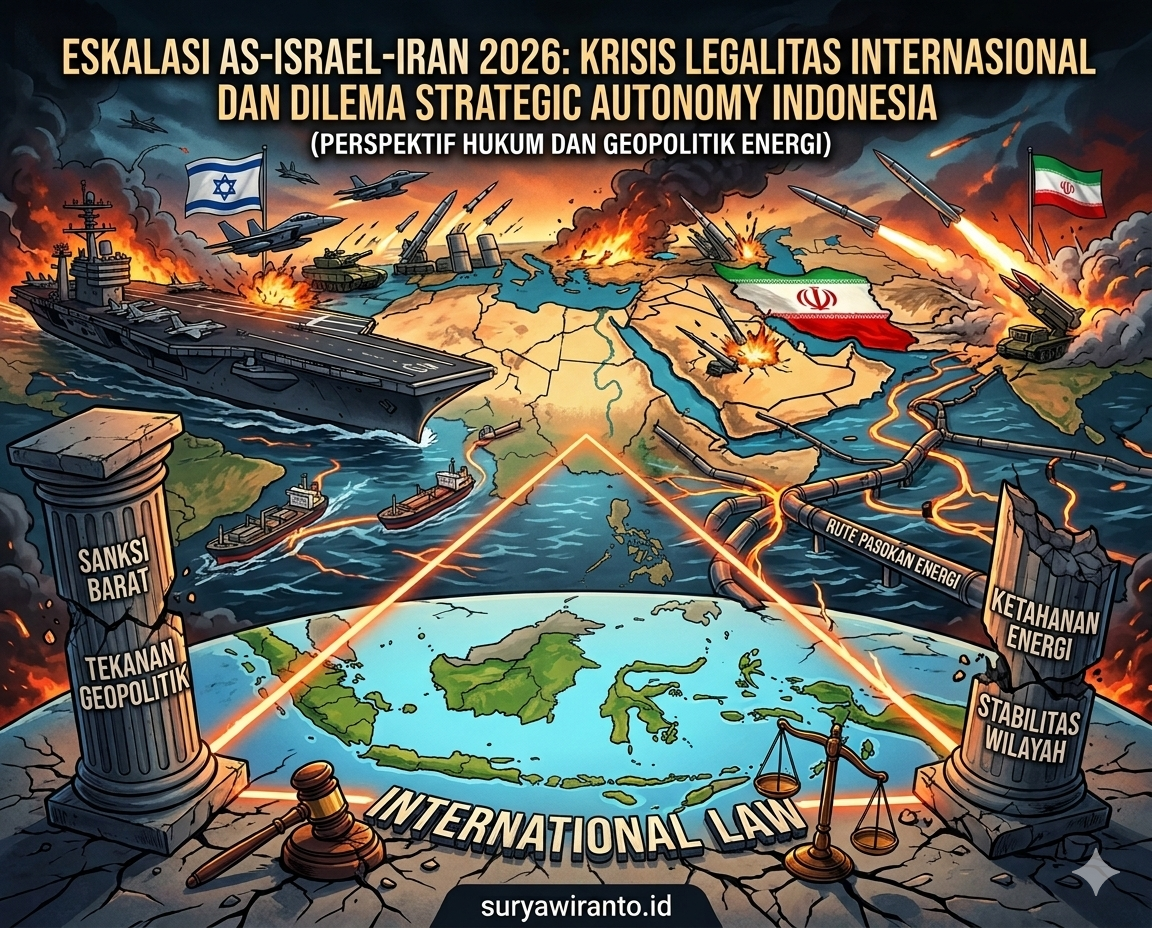
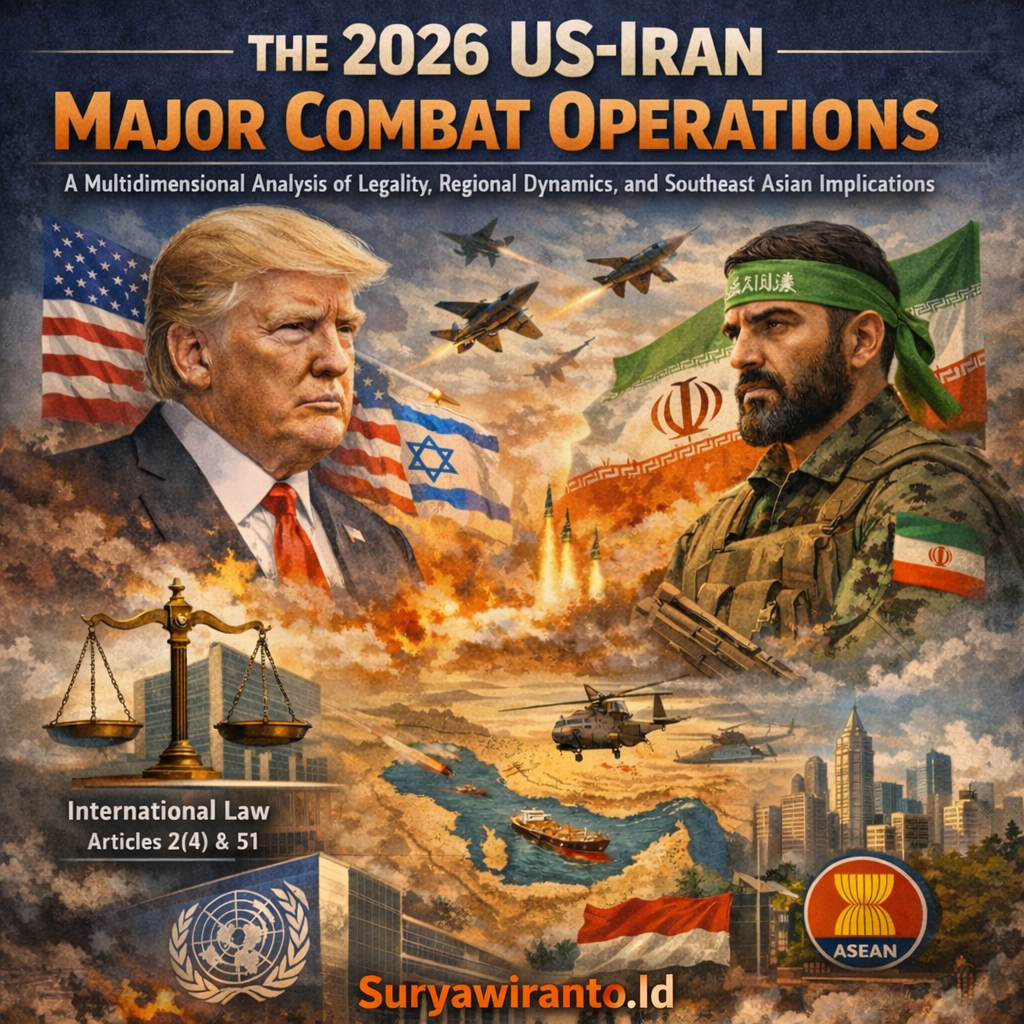
The escalation of armed confrontation between the United States and Iran entered a decisive phase when President Donald Trump announced the commencement of major combat operations in late February 2026, followed by coordinated airstrikes with Israel on 28 February 2026. This article examines the character of these operations, their strategic objectives, and their conformity with international law, particularly Articles 2(4) and 51 of the United Nations Charter. It further analyzes three short-term escalation scenarios and assesses regional responses, including Gulf state restrictions on territorial access. Finally, it evaluates the implications for Indonesia and ASEAN in safeguarding energy security and strategic autonomy amid intensifying multipolar rivalry. The study adopts a doctrinal legal method combined with strategic analysis to offer policy-relevant conclusions for middle powers navigating systemic instability.
Keywords: Major Combat Operations, Iran, United States, International Law, Gulf Geostrategy, ASEAN Strategic Autonomy.
1. Context and Character of Military Operations
The official announcement by President Donald Trump regarding the initiation of major combat operations against the Islamic Republic of Iran marked a transformative moment in Middle Eastern geopolitics. On 28 February 2026, coordinated United States-Israel airstrikes targeted facilities in Tehran and other strategic locations identified as nuclear and military infrastructure. This development represented a shift from prolonged diplomatic containment toward overt kinetic engagement. The timing of the announcement, delivered directly from Washington, underscored the political intent to frame the action as a decisive preventive measure rather than a reactive reprisal.
Unlike the 2003 invasion of Iraq, which involved large-scale ground force deployment under President George W. Bush, the 2026 operations were characterized by reliance on airpower, cyber capabilities, and maritime strike platforms. The United States deployed two aircraft carriers to the Persian Gulf, including the USS Gerald R. Ford, commissioned in 2017 as the lead ship of its class, equipped with the Electromagnetic Aircraft Launch System that enhances sortie generation rates. The dual-carrier posture signified a calibrated yet formidable projection of force, designed to sustain high-tempo operations without territorial occupation.
This operational design reflects doctrinal evolution embedded in the 2023 U.S. National Defense Strategy, which prioritizes integrated deterrence, rapid precision strikes, and minimization of protracted ground engagements. The absence of large-scale troop mobilization in Kuwait or Saudi Arabia suggests an intentional avoidance of occupation dynamics that characterized Afghanistan after 2001 and Iraq after 2003. Thus, the character of the 2026 operations may be conceptualized as coercive diplomacy implemented through technologically advanced limited warfare, aiming to degrade adversarial capabilities while constraining escalation thresholds.
2. Strategic Objectives and Domestic Momentum in Iran
While the stated justification centered on preventing Iran from acquiring nuclear weapons capability, the strategic calculus appears multilayered. The United States has long argued that Iran’s uranium enrichment activities exceed civilian energy requirements, a concern previously addressed under the Joint Comprehensive Plan of Action of 2015. Following the US withdrawal from that agreement in 2018, enrichment levels reportedly surpassed 60 percent purity in subsequent years, intensifying proliferation anxieties. The 2026 operations were framed as anticipatory self-defense against an emerging existential threat.
However, beyond the nuclear dossier lies the possibility of calibrated political transformation. Statements by Israeli Prime Minister Benjamin Netanyahu and President Trump implicitly encouraged the Iranian populace to assert political agency. Historical precedent demonstrates that internal mobilization, such as the nationwide protests following the death of Mahsa Amini in September 2022, revealed generational discontent with clerical governance. The 40-day mourning cycle embedded in Shi’a tradition has historically facilitated cumulative protest waves, including during the 1979 Islamic Revolution.
Strategically, Washington may anticipate that sustained external pressure combined with internal dissatisfaction could induce elite fragmentation within the Islamic Revolutionary Guard Corps. Yet such expectations remain speculative. Wartime nationalism often consolidates rather than fractures domestic unity. Therefore, the success of this limited-force strategy hinges upon sociopolitical variables that cannot be engineered solely through military means.
3. Model Differentiation and Political Messaging
The operational template applied in 2026 differs fundamentally from regime-change precedents in Iraq and Libya. The United States has refrained from explicitly targeting Iran’s Supreme Leader, Ayatollah Ali Khamenei, thereby avoiding symbolic decapitation that could unify disparate factions. The lesson drawn from Iraq, where the dissolution of state institutions facilitated the emergence of the Islamic State in 2014, informs a more cautious approach emphasizing capability degradation over institutional collapse.
Political messaging accompanying the strikes underscores this differentiation. By appealing directly to Iranian citizens while avoiding blanket condemnation of the armed forces, Washington signals potential clemency for factions willing to distance themselves from hardline elements. Such signaling aligns with deterrence theory articulated by Thomas C. Schelling in “The Strategy of Conflict,” wherein coercion operates through credible threats combined with implicit assurances.
Nevertheless, Iran’s regional network complicates containment. Tehran maintains strategic partnerships with Hezbollah in Lebanon, armed groups in Iraq and Syria, and the Houthi movement in Yemen. Retaliatory activation of these actors could transform a bilateral confrontation into a regional conflagration. Consequently, the United States’ attempt to localize hostilities within Iranian territory confronts structural constraints imposed by transnational proxy alignments.
4. International Law and Legitimacy Assessment
The legality of the 2026 operations must be examined through the framework of the UN Charter. Article 2(4) prohibits the threat or use of force against the territorial integrity or political independence of any state. The only recognized exceptions are collective security authorization by the Security Council under Chapter VII and individual or collective self-defense under Article 51 following an armed attack. As no Security Council resolution authorized the strikes, the United States must rely upon a claim of self-defense.
The doctrine of anticipatory self-defense, though invoked historically, remains controversial. The Caroline correspondence of 1837 articulated criteria of necessity and proportionality, requiring that the threat be instant, overwhelming, and leaving no choice of means. Whether Iran’s nuclear trajectory constituted such imminence is legally debatable absent demonstrable evidence of impending weaponization. If the objective extends to political transformation, the action may contravene the customary international law principle of non-intervention, affirmed in the 1986 International Court of Justice judgment in Nicaragua v. United States.
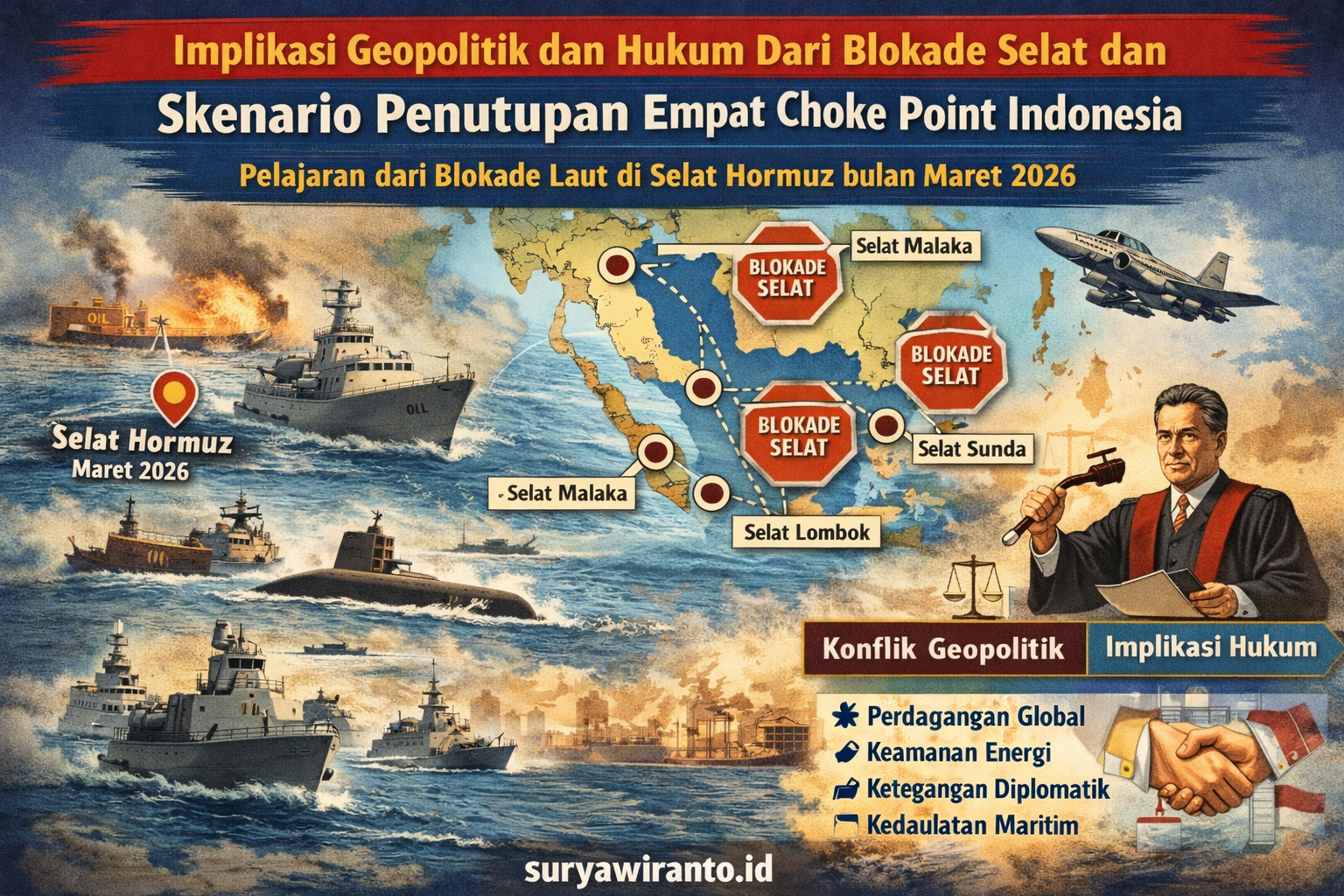
Regional implications amplify legal scrutiny. Iran reportedly possesses approximately 2,000 ballistic missiles with ranges capable of striking US facilities in Qatar, Bahrain, and the United Arab Emirates. Disruption of the Strait of Hormuz, through which roughly one-fifth of global petroleum consumption transits according to the International Energy Agency’s 2025 Oil Market Report, would constitute a threat to international peace and security under Article 39 of the Charter. Thus, the legality question intersects directly with global economic stability.
5. Seventy-Two Hour Scenarios and Strategic Risk
Within the initial seventy-two hours, three plausible trajectories emerge. The first scenario involves calibrated retaliation, whereby Iran conducts limited missile strikes to preserve deterrent credibility while signaling openness to diplomatic de-escalation. Such a pattern would mirror prior episodic exchanges, maintaining confrontation below the threshold of full-scale war.
The second scenario entails rapid escalation characterized by sustained missile barrages, cyberattacks on Gulf infrastructure, and proxy activation across Lebanon and Yemen. This trajectory risks drawing additional actors into hostilities and compelling broader US engagement. Energy markets would likely react immediately, with price volatility reverberating across Asia.
The third scenario contemplates internal political rupture triggered by sustained military pressure. Although transformative, this pathway bears the lowest probability given historical tendencies toward wartime consolidation. Comparative analysis of Iraq in 2003 and Libya in 2011 demonstrates that regime destabilization absent institutional transition planning frequently yields protracted instability. Consequently, the 2026 operations constitute a strategic gamble wherein military precision cannot guarantee political outcome.
6. Implications for Indonesia and Strategic Autonomy
For Indonesia, whose crude oil imports exceeded 500,000 barrels per day in 2024 according to national energy statistics, disruption in the Strait of Hormuz would exert immediate fiscal and inflationary pressure. As a proponent of the “free and active” foreign policy doctrine articulated since 1948, Indonesia must balance normative commitment to non-intervention with pragmatic safeguarding of energy security.
Diplomatically, Indonesia can leverage ASEAN mechanisms to advocate de-escalation, while engaging the Organization of Islamic Cooperation to reinforce civilian protection norms. Simultaneously, domestic policy must accelerate energy diversification, including renewable expansion and strategic petroleum reserve enhancement. In a multipolar system where major-power rivalry intensifies, strategic autonomy requires resilience at both diplomatic and economic levels.
In conclusion, the 2026 US-Iran major combat operations illuminate the intersection of legality, coercive strategy, and systemic transition. While framed as preventive self-defense, the action occupies contested legal terrain and carries substantial escalation risk. For middle powers such as Indonesia, prudence, diversification, and proactive diplomacy remain essential to navigating uncertainty in an era defined by volatile power redistribution.
Author Profile
Adv. Dr. Surya Wiranto, SH MH., is a retired Rear Admiral of the Indonesian Navy and senior strategic analyst specializing in Indo-Pacific security, international maritime law, and maritime affairs. He serves as Advisor to Indo-Pacific Strategic Intelligence (ISI) and lectures on Maritime Security and International Law of the Sea at Indonesia’s Defense University.
Bibliography
- International Court of Justice. (1986). Military and Paramilitary Activities in and against Nicaragua (Nicaragua v. United States of America).
- International Energy Agency. (2025). Oil Market Report. Paris.
- Schelling, Thomas C. (1960). The Strategy of Conflict. Harvard University Press.
- United Nations. (1945). Charter of the United Nations.
- U.S. Department of Defense. (2023). Summary of the 2023 National Defense Strategy of the United States of America. Washington, DC.
- Relevant official statements from the Permanent Mission of Iran to the United Nations (February 2026) and global media reporting dated 28 February-1 March 2026.